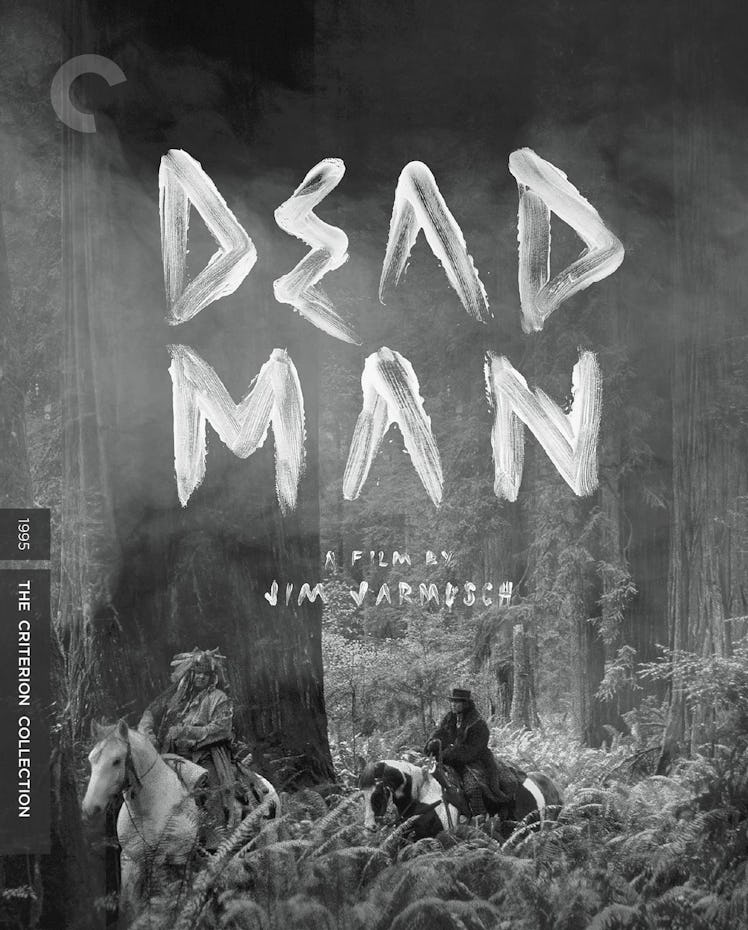
The Best Revisionist Western Just Got A 4K Upgrade
Hold infinity — and a Blu-Ray — in the palm of your hand.

By the middle of the 1990s, two Westerns had won Best Picture in three years. That was a big deal, because the genre had been more or less dormant since Heaven’s Gate cratered at the box office in 1980. The successes of Kevin Costner’s Dances With Wolves and Clint Eastwood’s Unforgiven came a few years after Costner starred in Silverado and Eastwood tested the waters by directing and starring in Pale Rider, two 1985 films that set the stage for the leading men to dazzle audiences and Academy voters with much grander follow-ups.
Both also tried to address the racist and violent legacy of heroism in Western films, remaking the genre for a new, sophisticated era of Hollywood filmmaking. The ‘90s uptick in revisionist Westerns developed alongside the growth of American independent cinema, and the intersection of these two booms is Jim Jarmusch’s Dead Man, now available in 4K thanks to the Criterion Collection. In it, accountant William Blake (Johnny Depp) survives a gunshot and is guided through the haunted American frontier by an outcast Native American (Gary Farmer) who believes that his charge is the reincarnation of the William Blake, the classic Romantic-era English poet.
How Was Dead Man Received Upon Release?
Like many of Jarmusch’s films, Dead Man did not draw universal acclaim. It was Jarmusch’s sixth feature, but the period setting significantly jacked up the budget compared to his cheaper dramas. In an undeserving pan, Roger Ebert criticised many elements, like Neil Young’s hypnotic, throbbing guitar score and Jarmusch’s desire to not satisfy our expectations, that make it so compelling. Dead Man grossed only $1 million upon release, but it’s since earned a reputation as one of the best films of the ‘90s.
Filled with a subversive sense of ironic humor, incredible actors in cameo roles, and a distinct lack of narrative urgency, Dead Man denies the aesthetic and pleasures of the Western genre, and its drifting, poetic, and often hallucinogenic sensibilities led critic Jonathan Rosenbaum to call Jarmusch’s film an “acid Western.” This unique subversiveness is how Dead Man stands toe-to-toe against its contemporary revisionist Western peers, despite having a fraction of the resources and box office receipts.

Dead Man is a surreal journey through the rotten heart of the West.
Why Is Dead Man Important to See Now?
When Blake makes a long trek to the manufacturing town of Machine, he discovers the job he was offered has been filled by someone else. He attempts to drown his sorrows and goes home with Thel (Mili Avital), but the sudden appearance of her husband (Gabriel Byrne) results in man and wife dead from gunshot wounds, and Blake fleeing into the night, wounded by a bullet close to his heart. When he wakes up, he’s being tended to by Nobody (Gary Farmer), a foul-mouthed Native American outcast, who tells him the bullet cannot be retrieved, sentencing Blake to a halfway state between life and death. But he’s still a wanted man, and three killers have been ordered to bring him in “dead or alive.” In Blake’s case, it’s not entirely clear which word best describes him.
Dead Man promises no grand adventure on its quest towards Blake’s spiritual completion. The crisp black-and-white cinematography is defined by long, glacial takes of Blake ambling without direction across the wild frontier, and the story structure is defined by a series of strange and entrancing episodes rather than any swell of momentum. But that’s not to say that Jarmusch has skimped on any detail in his Western; his skill at staging strange and stylized conversations often cuts to the spiritual void at the heart of the American colonial project.
Three murderous settlers (Iggy Pop, Jared Harris, and Billy Bob Thornton) fret over the persecution of Christians in Ancient Rome. One of the hired killers (Aliens’ Lance Henriksen) kills and eats another, a Western trope rarely reserved for white characters. Whenever Blake’s wanted posters are updated to include new murders, his portrait is drawn a little bit more gaunt and lifeless as it tunes into how close Blake is moving towards the veil between life and death. There is no conquering hero in Dead Man: the Western outlaw archetype is hijacked and displaced into a grander, spiritual landscape, where he discovers just how close he’s standing to oblivion at all times.

Whatever you’re expecting from Dead Man, you’ll probably be surprised.
What New Features Does Dead Man Blu-ray Have?
Dead Man now has a 4K remaster supervised and approved by the man who knows it best: director Jim Jarmusch. A regular Blu-ray disc adds a bumper crop of special features, like Jarmusch answering fan questions, footage of Neil Young composing the idiosyncratic score, readings of William Blake’s poetry by several of the film’s performers, and commentary for selected scenes by two key creatives involved in the film’s incredible mood: production designer Bob Ziembicki and sound mixer Drew Kunin. Film critic Amy Taubin and music journalist Ben Ratliff also contribute insightful essays.